|
PERSONAL:
|
-
Romero grew up in East Los Angeles, known by most simply as "East L.A.," there were a lot of temptations. Drugs, gangs, plenty of them a lot more dangerous than the heart of the New York Yankees batting order.
He is proud of his heritage and says it gave him the incentive to chase his dreams of being a major league pitcher, not just a kid who got swallowed up in a bad environment.
"I bleed East L.A.," Ricky said in 2012. "I want people to know where I come from. I am not ashamed of it."
- Romero's Dad played baseball all his life, starting during his childhood in Mexico and continuing into his 40s after moving to Southern California as a teenager. So he knew the value of being lefthanded and sought to cultivate that virtue in his son, Ricardo, Jr., when little Ricky was a four-year-old preschooler.
“I grabbed the pencil in my right hand and my Dad was like, ‘No, no. We’re going to make him lefthanded,’ and my Mom was like, ‘Leave him alone, let him do what he wants to do,’ ” Ricky said. “He put the pencil in the left hand, and then I started doing everything lefthanded. I started throwing a baseball lefthanded. I hit righthanded, but it’s the only thing I do righthanded.
“Now my Dad tells my Mom, ‘I told you it would pay off. I told you.’ ” (Will Kimmey-Baseball America-4-11-05)
- Ricky's parents met at a baseball field.
-
Ricky was a dominant pitcher for Roosevelt High School in Los Angeles as a senior. He went 12-1 with a 0.53 ERA and 162 strikeouts (and just 27 walks) in 80 innings. Opponents only managed a .110 batting average. He fired nine complete games and two shutouts, including a no-hitter against his former school, Garfield, in which he recorded 14 of 15 outs by strikeouts. (The game was shortened to five innings due to the mercy rule.)
And, Romero graduated with a 3.8 grade point average and high honors.
- In 2002, the Red Sox drafted him in the 37th round, but he chose college.
- Rick went on to Cal State-Fullerton, majoring in kinesiology.
-
In 2004, Romero went 14-4 with a 3.37 ERA for Cal-State Fullerton in his sophomore year. Then, in the summer, he was very impressive pitching for Team USA, posting a 1.57 ERA, second on the team and first among starters, while striking out 30 hitters in 28.2 innings of work.
In 2005, he posted a 12-5 record with a 2.95 ERA for Cal-State Fullerton. In 125 innings of work, he struck out 132 batters and only walked 32. Opposing hitters managed just 99 hits off him—and less than a third (30) of those hits went for extra bases.
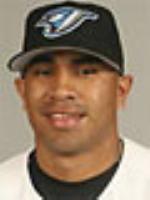
- June 2005: Romero signed with the Blue Jays for a bonus of $2.4 million. Demetrius Pittman is the scout who followed and signed Ricky.
-
During the offseason before 2006 spring training, Baseball America rated Ricky as second best prospect in the Blue Jays' organization. The magazine had Romero as third best prospect in the Toronto farm system during the winter before 2007 spring camp opened. In the winter before 2008 spring training, the magazine had Romero as 5th-best prospect in the Blue Jays farm system. And before 2009 spring training, they had Ricky at #8 in the Toronto organization.
- Ricky says his favorites include: Pedro Martinez (player), Los Angeles Dodgers (team), tacos de carne asada (food), Blood In, Blood Out (movie), and Chris Tucker (actor).
- He says a goal is to make enough money to buy his parents a new home. And he reached that goal early in 2011.
-
Romero loves the holidays. Every Christmas Eve his Mom cooks tamales.
"It's a Mexican-type thing that they do—my Mom actually makes them—and then we kind of just sit around all day, chill, relax, the family comes over and we have a great time. We're a really tight family, and for me, this is the time that I enjoy the most—seeing my little brothers and sisters opening gifts. To me, it's more about giving than receiving. The tradition has always been there."
-
Dec. 31, 2018: Romero retired from baseball.
TRANSACTIONS
- June 2005: The Blue Jays chose Romero in the first round, out of Cal State-Fullerton.
-
August 14, 2010: Romero and the Jays agreed to a five-year, $30.1 million contract extension, through the 2015 season, with a club option for the 2016 season. The contract calls for a $1.2 million signing bonus and salaries of $750,000 in 2011, $5 million in 2012, $7.5 million each year for 2013 through 2015 and a $13 million club option for 2016 with a $600,000 buyout.
-
May 11, 2015: Romero was signed to a Minor League deal with the Giants.
- May 30, 2017: Romero signed with the Tijuana Toros of the Mexican Baseball League in an attempt to prolong his playing career.
| |
|
|
PITCHING:
|
- Romero has a lively 88-94 mph late-sinking two-seam FASTBALL with good arm-side movement and a four-seamer with good lefthanded movement, a solid 12-to-6 power CURVEBALL at around 78 mph, a fair SLIDER and his best pitch: a very good 83-84 mph vulcan-CHANGEUP that is very effective against righthanded hitters. That changeup acts like a splitter. He added a CUT FASTBALL in 2010. In 2012, he began front-dooring it to lefthanded hitters.
Ricky occasionally lets the hitter know a breaking pitch is coming because he alters his arm slot when he throws one.
- He has a smooth, easy delivery.
- Ricky displays very good control. And he is very confident, displaying the poise you like to see. He loves the competition, attacking hitters. He is intense and works to keep hitters off-balance.
- When he throws strikes, he is effective. But he is not very effective on nights when his command is off. His success comes when he pitches to spots and keeps hitters off-balance instead of trying to overpower them. (Spring 2009)
- Romero plays with heart and passion for the game. He is driven to succeed. He has the right temperament and makeup. Plus he studies the game and understands the science of pitching. He controls the tempo of the game.
- Ricky does a decent job of throwing on a downhill plane. In 2007, the Blue Jays simplified his delivery, making it easier for him to get extension out over his front leg.
- Romero's greatest weakness is in facing lefthanded hitters. In 2011, they hit .269 with a .372 on-base percentage against Romero compared to just .194 with an on-base mark of .263 for right-handers. It's a drastic difference in splits but Romero believes he has an idea of how to change his fortunes this year.
Romero entered 2012 Spring Training with the goal of refining his cut-fastball. The native of Los Angeles has more or less perfected the pitch to right-handed batters, but he has experienced difficulty using it against lefties. So Ricky began front-dooring his cut fastball vs. lefties. And he used his curve more against them, too.
"Any time you can create depth going away from a left-hander, that's the one that's going to slow some left-handers down," Blue Jays manager John Farrell said. "They'll look out over the plate against him, know they'll probably get something hard away for the majority of the at-bat. But I think as he creates more consistency with the curveball against them, that's where he'll slow them down."
-
The Blue Jays altered Ricky Romero's mechanics on the mound during 2013 spring training. The goal is to have Romero pitch with his hips more square to the plate. He has a tendency to throw across his body, with his front foot falling off to the side. It's a directional issue and one that causes problems with his command.
To date, most of the work has centreed around the lower half of his body, but that will now be expanded to the upper half as well. When Romero moves east-to-west with his frame and not north-to-south, his arm slot also has a tendency to drop and there isn't a proper finish to each pitch.
It's an effort to get the upper body and lower body working as one. He spent a lot of time working on his lower half direction and now will spend an equal amount of time working on the upper half and making sure everything is in unison.
- April, 2013 improvements: The Blue Jays worked to have Romero pitch with a more direct line to the plate. The goal is to stop him from throwing across his body as much as he has done in the past. His delivery is a more repeatable and consistent throwing motion.
Romero used to go with a full windup by bringing the glove over his head during the delivery. That has since changed, and Romero now also taps the ball in his glove prior to each pitch to act as a timing motion. The walks will never be completely eliminated, but the hope is that the number of pitches outside of the zone will be at least more limited.
"He just basically brings [the glove] down to his belt, little things to take away the moving parts overall, sometimes he'd rock back, balance and things like that," Blue Jays G.M. Alex Anthopoulos said. "Dane Johnson (pitching coach) is encouraged by it and the results are obviously good."
-
As of the start of the 2014 season, Romero career record was 51-45 with 4.16 ERA, having allowed 82 home runs and 766 hits in 801 innings.
| |
|