
|

|

|

|

|
| |
|
|
| |
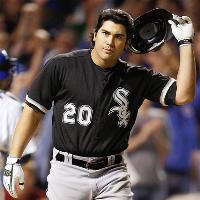 |
Nickname: |
N/A |
Position: |
OF |
| Home: |
Chula Vista, CA |
Team: |
Retired |
| Height: |
6' 1" |
Bats: |
R |
| Weight: |
235 |
Throws: |
R |
| DOB: |
8/28/1982 |
Agent: |
N/A |
| Birth City: |
Bellflower, CA |
Draft: |
D'Backs #1b - 2003 - Out of Stanford Univ. |
| Uniform #: |
N/A |
|
|
| |
| YR |
LEA |
TEAM |
SAL(K) |
G |
AB |
R |
H |
2B |
3B |
HR |
RBI |
SB |
CS |
BB |
SO |
OBP |
SLG |
AVG |
| 2004 |
TL |
EL PASO |
|
60 |
210 |
39 |
75 |
19 |
0 |
6 |
38 |
0 |
|
18 |
23 |
|
|
.357 |
| 2004 |
CAL |
LANCASTER |
|
65 |
242 |
64 |
75 |
14 |
1 |
15 |
51 |
5 |
|
25 |
33 |
|
|
.310 |
| 2005 |
PCL |
TUCSON |
|
136 |
452 |
98 |
136 |
28 |
4 |
21 |
89 |
9 |
|
72 |
71 |
|
|
.301 |
| 2006 |
PCL |
TUCSON |
|
85 |
318 |
66 |
92 |
30 |
3 |
9 |
52 |
5 |
0 |
45 |
46 |
.424 |
.487 |
.289 |
| 2006 |
NL |
DIAMONDBACKS |
$327.00 |
57 |
166 |
23 |
42 |
13 |
3 |
9 |
32 |
1 |
0 |
15 |
34 |
.342 |
.530 |
.253 |
| 2007 |
NL |
DIAMONDBACKS |
$381.00 |
81 |
229 |
29 |
49 |
16 |
0 |
5 |
31 |
2 |
2 |
18 |
54 |
.298 |
.349 |
.214 |
| 2007 |
PCL |
SIDEWINDERS |
|
33 |
115 |
30 |
40 |
12 |
1 |
4 |
27 |
0 |
1 |
9 |
14 |
.430 |
.574 |
.348 |
| 2008 |
AL |
WHITE SOX |
$400.00 |
130 |
480 |
96 |
138 |
26 |
1 |
36 |
100 |
7 |
3 |
66 |
80 |
.394 |
.571 |
.288 |
| 2009 |
AL |
WHITE SOX |
$550.00 |
99 |
351 |
47 |
83 |
14 |
0 |
21 |
56 |
3 |
0 |
31 |
52 |
.323 |
.456 |
.236 |
| 2009 |
SAL |
KANNAPOLIS |
|
2 |
3 |
0 |
1 |
1 |
0 |
0 |
1 |
0 |
0 |
2 |
0 |
.600 |
.667 |
.333 |
| 2009 |
IL |
CHARLOTTE |
|
12 |
37 |
10 |
14 |
3 |
0 |
1 |
9 |
0 |
0 |
5 |
2 |
.467 |
.541 |
.378 |
| 2010 |
AL |
WHITE SOX |
$3,200.00 |
131 |
453 |
73 |
110 |
25 |
2 |
26 |
87 |
2 |
2 |
50 |
83 |
.342 |
.479 |
.243 |
| 2011 |
AL |
WHITE SOX |
$5,050.00 |
118 |
421 |
53 |
107 |
31 |
0 |
24 |
77 |
1 |
1 |
34 |
84 |
.340 |
.499 |
.254 |
| 2012 |
CAL |
LAKE ELSINORE |
|
4 |
14 |
3 |
6 |
1 |
0 |
1 |
5 |
0 |
0 |
0 |
2 |
.467 |
.714 |
.429 |
| 2012 |
NL |
PADRES |
|
86 |
284 |
44 |
74 |
21 |
0 |
16 |
46 |
0 |
1 |
36 |
41 |
.374 |
.504 |
.261 |
| 2012 |
PCL |
TUCSON |
|
5 |
14 |
5 |
4 |
0 |
0 |
1 |
4 |
0 |
0 |
2 |
3 |
.412 |
.500 |
.286 |
| 2013 |
NL |
PADRES |
$9,500.00 |
82 |
276 |
42 |
76 |
21 |
0 |
13 |
44 |
0 |
0 |
31 |
55 |
.363 |
.493 |
.275 |
| 2014 |
NL |
PADRES |
|
50 |
130 |
9 |
23 |
6 |
0 |
4 |
18 |
0 |
0 |
17 |
33 |
.284 |
.315 |
.177 |
| 2014 |
PCL |
EL PASO |
$9,500.00 |
3 |
8 |
1 |
2 |
0 |
0 |
1 |
1 |
0 |
0 |
0 |
0 |
.250 |
.625 |
.250 |
| 2014 |
CAL |
LAKE ELSINORE |
|
4 |
10 |
1 |
1 |
0 |
0 |
0 |
0 |
0 |
0 |
3 |
2 |
.308 |
.100 |
.100 |
| 2015 |
PCL |
TACOMA |
$8,000.00 |
5 |
17 |
2 |
3 |
1 |
0 |
0 |
1 |
0 |
0 |
0 |
2 |
.263 |
.235 |
.176 |
|
|
PERSONAL:
|
-
Quentin says, "I'm a reflection of my parents. Basically I am who I am because of them."
Carlos is a graduate of Stanford (in three and a half years) and a product of two people who wanted little more than to give their children a better life.
"Before we even had children, we decided to try to keep them in private schools as long as we could, no matter the cost," Butch Quentin, Carlos' father says. "You can leave your kids a lot of stuff, but if you give them an education, they have it all their lives."
-
As a 12-year-old, Carlos was 5-feet-9 and 140 pounds, and sported a mustache. His Mom and Dad sympathized with parents who complained that he was too big to play with their boys.
"No way was he going to play Little League," his Mom said. "We were afraid he was going to hurt somebody. The poor little third baseman would be gone if he hit it hard."
-
In 2000, Quentin graduated from San Diego's University High School after being a three-sport athlete. He played outfield in baseball, running back/outside linebacker in football, and was a small forward in basketball on the state championship team. In baseball, he set career school records in baseball with 28 homers and 119 RBI.
He was named San Diego Male Athlete of the Year in 2000.
He was also an honor roll student at University High.
Being an athletic hotbed: Mark Prior, Bill Walton's sons Luke and Chris, and Baltimore Ravens fullback Justin Green were Carlos' schoolmates and teammates. Barry Zito graduated the year before Carlos enrolled.
-
Carlos was not bad when he played basketball in high school either. Though not a starter on the state championship basketball team, he stood out as a role player, as "the guy you'd put in to rebound and he'd grab 13, 14," his high school coach says. "He would do whatever the coach asked him and do it with this amazing sense of pride."
That approach left a lasting impression on Jim Tomey, the school's basketball coach.
"Basketball was not even his first sport and yet he probably made more of an impact on me and the teams he played for than any athlete I've been around," Tomey says. "The daily toughness he brought, his humble nature, the tone he set for the rest of the guys … he [affected] every team he played for."
-
Some, including Quentin, say football may have been his first love. He excelled at linebacker and H-back enough to garner Division I attention.
"He had an unbelievable desire to win every battle," says Sean Doyle, his high school football coach, citing the city championship game his senior year in which Quentin forced and returned a fumble for the tying touchdown, then set up the game-winner with his running.
-
In 1999, Carlos participated with the nation’s top high school prospects on the USA Junior National Team that won the World Championship in Taiwan.
He also played with Team USA in the summer of 2001 and 2002.
- In 2003, Quentin played all season at Stanford with an elbow injury. He has an incredibly high pain tolerance.
-
After graduating from high school in 2000, Quentin went to Stanford. He majored in political science, which he received his degree in during the offseason before 2004 spring training.
When Carlos was asked if he thinks that a high ACT or SAT score could correlate into being a smarter baseball player, he said, "No. If you're a smart person, you could get a high test score. But I know a lot of players that have great baseball instincts who might not have done very well on those tests."
Quentin is very intelligent, graduating from Stanford in 3 1/2 years.
-
Carlos' Dad, Butch Quentin, was born in Compton, within the notorious South Central Los Angeles region. His kindergarten class of 1952 featured a picture of George Washington on one side of the door and Dodgers star Duke Snider on the other.
When he was in the third grade, his parents moved eight miles east to Norwalk, a safer area in the suburbs. Escaping the gang culture that ensnared so many of his friends, he joined the Air Force out of high school and served in Vietnam.
Upon his return, he helped support his family and went to college on the GI Bill with thoughts of becoming a teacher. But his mother's death and his own marriage sidetracked those plans and Butch went to work for Unified Grocers, a grocery co-op, remaining there for 39 years as a mechanic and later as a foreman until he retired last year.
"One thing about my father," Quentin says. "He never pointed to his past or the hardships he may have dealt with as any type of reason for whatever my family went through or for us to succeed."
Butch Quentin has French, German, and Irish roots on his father's side; his mother's side is Irish.
Carlos's Mom, Queta, is second-generation Mexican-American, her family is from Guadalajara, but she and her children do not speak Spanish fluently.
- Carlos is very coachable. He applies what he has been taught, making the adjustments quickly.
-
Quentin is a hard-nosed player. He comes to the park ready to play to win every game. His makeup is top of the line. He has tremendous drive and passion to make himself better.
He has both common sense and is a good person. He displays natural leadership ability in the clubhouse. But he doesn't say much, and he is modest, not ever boastful in any way. When he does talk, he is an eloquent speaker.
Carlos is an intense person, but his dedication to the game is sometimes mistaken for moodiness.
- His hobbies include ping-pong, billiards, and listening to music.
- In the fall of 2003, Carlos did his rehab from Tommy John surgery while he was completing his degree in political science.
-
During the offseason before 2004 spring training, Baseball America rated Carlos as the 7th-best prospect in the D'Backs' organization. And just before 2005 spring training, the magazine rated Quentin as the #1 prospect in the Arizona farm system!
Then, during the winter before 2006 spring training, Baseball America had Carlos as 3rd-best prospect in the Diamondback organization.
- In 2004, Quentin was the Diamondbacks Minor League Player of the Year, after leading the farm system in average (.332), runs (103) and on-base percentage (.435) while notching 32 doubles, 21 homers, 89 RBIs and a .549 slugging percentage at Class A Lancaster and Double-A El Paso.
- Though Carlos is from San Diego, he says he was never a Padres fan. Instead, he says he was a big fan of the Dodgers. "I'd go to games to see the Dodgers because I was born in Los Alamitos and lived there until I was five. My parents were both born in L.A."
- On July 14, 2007, Quentin was suspended for three games for his part in an altercation that occurred when his Tucson Sidewinders were in Colorado Springs. The fracas took place after Quentin was hit by a pitch in the fifth inning following an RBI double in the first and a homer in the third. Carlos had been hit by a pitch three times in two games by members of the SkySox pitching staff.
-
The following quote became the moniker of TCQ, as in 'The Carlos Quentin.'
"We wanted to upgrade at shortstop, get a setup guy for the bullpen, acquire Carlos Quentin, and not a guy like him but actually Carlos Quentin," said Williams in definitive tones during this conversation. It probably started as a way to poke fun at what many outside the White Sox front office looked at as a minor move, but one that was being stressed by Williams.
"It's a meaningful quote and I appreciate the support that what he said means," said Quentin of Williams's offseason comment. "It feels good to have someone back you up. I'm very appreciative."
-
"Carlos tries to take as much as he can even from a bad game and turn it into a positive," said White Sox teammate Brian Anderson, who played at Arizona when Quentin was at Stanford. "That way, the next day, he can carry it over."
-
An eloquent speaker when he has the time to be quoted. It is not that Quentin doesn't like th media. It is more about his pre-game preparation being so regimented that he's rarely found in front of his locker for even a short sitdown.
-
In November 2008, Carlos married his college sweetheart, Geane Goff in Palo Alto, California.
-
May 16, 2013: Carlos Quentin was at the hospital for the birth of his first son, Clark. Both Quentin's wife, Jeane, and son were in good condition after the birth. Padres manager Bud Black joked that he didn't know the specifics about height and weight, but did have a scouting report about the newest member of the Quentin family. "He projects as a two-sport guy, football and baseball," Black said.
-
Quentin's wife, Jeane Goff, was an All-American track and field athlete at Stanford University.
-
Quentin asked for his release from the Mariners after five games with Triple-A Tacoma and announced his retirement from baseball on May 1, 2015.
"Over the past several days, it became clear to me that my injuries have taken too great of a physical toll for me to be able to perform at the level I expect from myself," said Quentin. "As a result, I believe it is the right time for me to walk away and to refocus my energy on the next chapter of my life with my family."
"My understanding is his body just wasn't holding up," Mariners manager Lloyd McClendon said. (Johns - mlb.com - 5/1/15)
TRANSACTIONS
-
June 2003: He was drafted by the D'Backs (#1-b), out of Stanford University. Quentin signed for a bonus of $1.1 million. He was signed by scout Fred Costello.
-
December 3, 2007: The White Sox sent first baseman Chris Carter to the Diamondbacks, acquiring Quentin.
-
January 16, 2010: Carlos and the White Sox avoided arbitration, agreeing to a one-year, $3.2 million contract.
-
December 31, 2011: The Padres sent RHP Simon Castro and RHP Pedro Hernandez to the White Sox, acquring Quentin.
-
January 17, 2012: Quentin and the Padres avoided arbitration by agreeing on a one-year $7.025 million contract for 2012.
-
July 22, 2012: Quentin and the Padres agreed to a three-year extension worth $27 million dollars.
The extension has Quentin making $9.5 million in 2013, $9.5 million in 2014, and $8 million in 2015. There's a mutual option for 2016 worth $10 million, though Quentin can assure himself of $3 million in 2016 if he plays in 320 games over the three seasons: 2013, 2014, and 2015.
-
April 4, 2015: The Padres sent Quentin and OF Cameron Maybin to the Braves, along with prospects Matt Wisler and Jordan Paroubeck. The Braves sent closer Craig Kimbrel and OF Melvin Upton Jr. to the Padres.
- January, 2016: Carlos signed with the Twins. His contract earns him $750,000 if he makes the big league team.
-
April 22, 2015: The Mariners signed Quentin to a minor-league deal.
-
May 1, 2015: Quentin announced his retirement from baseball.
-
But on Feb. 2, 2016, Carlos signed with the Twins organization , coming out of retirement.
March 28, 2016: Quentin asked for, and was granted his release by the Twins.
| |
|
|
BATTING:
|
-
Quentin is a complete hitter for both average and good righthanded power. He is a run producer—an impact hitter in the lineup.
Quentin is a notorious first ball hitter. But in 2007, he started working on seeing more pitches.
"It's still a work in progress and a learning curve for him," D'Backs manager Bob Melvin said. "But I think he's understanding at times that when he swings at a lot of first pitches, he's not going to get a ball to hit on the first pitch, that they will try to get him to expand a little whether it's in or out. I think he's aware of that now, and where he will always be aggressive, somehow he finds a way to get deep in counts and draw walks, too." (Steve Gilbert-MLB.com-5/2/07)
-
The Indians' Ryan Garko, who was a year ahead of Quentin at Stanford, has noticed an improvement in his former teammate's pitch selection and not dwelling on each at-bat.
"We used to get on him about it," Garko said with a smile. "We thought it was a little bit too much. But if anything, I think what has helped him as a player is not being too intense. Sometimes he overthinks things. I think he has grown up a lot in terms of realizing how hard this game is and sometimes you can work yourself into slumps.
"He's a guy who wants to be in the cage, and I know in Arizona he was like that. He wanted to be in the cage all day and all night. Sometimes you have to learn to let go a little bit in this game." (Mark Gonzales-Chicago Tribune-5/21/08)
HIT BY PITCH RECORDS
-
Carlos gets hit by a whole lot of pitches.
In 2002, during a game at Stanford, he was hit five times in one game—which is an NCAA Division I college baseball record. For the season, he was hit 33 times.
-
In 2004, he was hit by a pitch in 14 of the first 23 games of the year, and a minor league record of 43 times for the season.
"He stands on the plate, and he's not afraid to turn his back to the ball and get on base," Diamondbacks farm director Tommy Jones noted.
-
In 2005, Carlos set the Pacific Coast League record for hit by pitches. Quentin, who had set the mark by being hit 29 times, then broke the record in 2006, setting a new mark of 31 HBP, and it was in just 85 games.
Late in the 2006 season, D'Backs manager Bob Melvin said of Quentin being hit by so many pitches: "He starts open, dives a little bit, not ridiculous, but when he does his momentum gets going that way and he has a little trouble getting out of the way."
-
In two years, 2004-2005, Carlos led the minor leagues by being hit with 72 pitches.
-
Carlos holds his hands high and crowds the plate. His most defining characteristic may be a batting style that not only produces pop but also puts him in harm's way of any ball more than a sliver inside. That is because he dives right into the plate when a ball approaches.
Quentin's stance is nothing out of the ordinary, but he moves toward the plate as the ball is pitched. The result? Contact, or contact.
"When the pitcher throws the ball, I just dive in. There is not much room to move out of the way because I have all my weight going toward the plate," said Quentin. "I just accept that I will be hit by my share of pitches," he said. "Sometimes it hits me in bad spots and it hurts a little, but I'm not going to change my approach at all." (help from Jack Magruder-Baseball America-7/14/04)
-
In August 2008, Quentin was hit by a pitch in six straight games—the first time, according to the Elias Sports Bureau, that had happened since at least 1920. (For the season, Carlos was hit by a total of 20 pitches.)
-
Quentin has always ranked among the Major League leaders in being hit by pitches. He was hit 24 times last season in 483 plate appearances—or once every 20.1 plate appearances. He has been hit by 102 pitches in his career—at a rate of once every 24.4 plate appearances.
But the rate this year is one HBP every 12.2 plate appearances.
“A lot of it has to do with the way I try to get away from pitches,” said Quentin. “My first priority is to protect my hands. I don’t move my body quite as quick. I expect to get hit because of that.”
-
April 11, 2013: Quentin charged the mound after being hit by a Zack Greinke pitch in the Dodgers' 3-2 victory over the Padres at Petco Park. He was fined an undisclosed amount and suspended for 8 games.
Greinke, who suffered a fractured collarbone, was expected to be sidelined eight weeks.
-
In 2003, during his final college season, at Stanford, Carlos dropped a Gary Sheffield-like bat wrap in favor of a flatter, calmer approach. He has quick hands that generate good bat speed.
"I wanted to get the bat to the ball the simplest way possible, so I flattened the bat out a bit and I’m a little more square to the ball. I’m not worrying about hitting home runs; I’m just trying to hit line drives. Before, curveballs were giving me problems; my swing was getting long and I was hitting a lot of popouts. Now I’m more square to the ball, going more to right field and more balanced. It’s really helped me with offspeed stuff. It’s a matter of trying to be as efficient as possible."
-
Quentin has a good eye at the plate, showing good discipline and a high on-base percentage. He knows which pitches he can drive and has a knowledge approach to hitting. He has a plan when he comes to the plate.
Carlos swings at the first pitch a lot and can be a first-ball hitter, but once he gets deep into the count, he draws a lot of walks and battles. That is mental toughness.
- He drives the ball to all fields and doesn't have to pull the ball to bop one over the wall.
-
White Sox hitting coach Greg Walker says that Quentin's plate discipline leads to his success.
"Carlos has such a unique swing and when he's right, he's as good as anyone in the game," Walker said. "When he's good, when he feels good, I'd just as soon have him up at the plate as anybody in baseball. When he's scuffling, the tough thing to understand is he has such great plate discipline when going good.
"If he's going bad, he's usually swinging at everything and expands the zone and gets himself out. He might have as good of plate discipline as anyone in baseball. That's the battle. The first cause of that problem is what we are trying to understand and have him understand. Why? Is it timing or is it mental, where he's trying to do too much and facing too much pressure?
"Ultimately, Carlos, in his career, has found answers and when he finds them, he's great," Walker said. (Scott Merkin-MLB.com-8/12/10)
-
No offense to those who make a living pinch-hitting, because Carlos holds them in high esteem, but the Padres outfielder would prefer to take his four at-bats consecutively with a dash of defense sprinkled in for good measure.
"It's a very difficult task and I have a lot of respect for the guys who do it," Quentin said. "I've been very fortunate to draw on experiences that I've had. But it's a very fickle thing."
But it's one Quentin isn't adverse to, as he his third consecutive pinch-hit in nine days, on May 25, 2014.
- As of the start of the 2016 season, Quentin's career Major League stats were: .252 batting average, 154 home runs and 702 hits with 491 RBI's in 2,790 at-bats.
| |
|
|
FIELDING:
|
- Quentin has a fine arm and good athletic ability. He has good instincts and decent enough speed to run down balls hit in his area, getting a good jump on the ball off the bat. He plays the game with fluidity and gracefulness.
- Carlos has plenty of arm for right field and a quick release.
- His baseball instincts are excellent. Quentin gets a good jump on the ball. But he isn't speedy enough for center to be his full-time spot. So he really is a corner outfielder.
- Quentin makes some plays that open eyes. He's fearless out there.
| |
|
|
RUNNING:
|
- Quentin has average speed. He is a threat to steal a base, so should not be overlooked by the pitcher when he is on first. He is a plus baserunner because of his fine instincts.
| |
|
|
CAREER INJURY REPORT:
|
- February-May 2003: Elbow problems troubled him throughout his final season at Stanford. But he played through it—both the regular season and the College World Series.
Carlos is tough, playing through pain.
- July 3, 2003: Quentin underwent Tommy John surgery following his college season, and after signing with the D'Backs.
- October 2004: Carlos missed a week of Arizona Fall League action with stiffness in his lower back.
- March 20-April 16, 2007: An MRI exam showed Quentin had a small tear in his left labrum. He rehabilitated the injury rather than having surgery, starting the season on the D.L.
The D'Backs' medical staff worked with Carlos on strengthening the muscles around the labrum (shoulder area), and they think that will help him avoid having to have surgery.
- August 2-September 1, 2007: Quentin was on the D.L. with a strained right hamstring.
- October 9, 2007: Carlos underwent shoulder surgery to repair his left labrum—the injury that he began the season with, yet played with most of the year. The doctor had to repair Quentin's rotator cuff, also.
- September 2, 2008: Quentin was on the D.L. with a broken right wrist that required surgery on September 8 in which a screw was inserted into the wrist. Carlos had complained of a sore right forearm before the September 2 game.
"My last at-bat, second pitch, I fouled it off against [Cliff] Lee," Quentin said in describing to about two dozen media members how he broke his wrist Monday. "Something I've done thousands of times since I was a kid, I had my bat in the left hand and kind of hit down on the bat head with my right hand [with a] closed fist. I hit it a little bit low and nicked my wrist.
"I finished the at-bat, and 40 minutes later, I started feeling something in my wrist. I woke up the next morning and that was that. It's something I've done a lot. Unfortunately, it hit the bone perfectly and not in a good spot."
He underwent surgery on September 8 at Rush University Medical Center, and the procedure was performed by team hand and wrist specialists, Dr. Mark Cohen and Dr. John Fernandez, and White Sox lead orthopedic surgeon Dr. Charles Bush-Joseph of Midwest Orthopedics at Rush University. A screw was inserted to aid with the healing process.
- May 15, 2009: Quentin missed six games with plantar fascitis, caused by excessive wear. Carlos said he was fitted with new insoles for his cleats in addition to a protective boot. The pain began in his left heel but moved toward mid-foot after he received a cortisone shot. “It’s annoying, and then it gets painful,” Quentin said.
May 26-July 20, 2009: Carlos was on the D.L. with the plantar fascitis in his left foot.
- October 6, 2009: Quentin underwent surgery to have a pin removed from his surgically repaired right wrist. He had the pin inserted in September 2008 after fracturing his wrist while slamming it against a bat after fouling off a pitch.
- August 20-September 12, 2011: Carlos had to leave a game after he appeared to land awkwardly on his left shoulder while making a diving catch on a line drive by the Rangers' Craig Gentry in the first inning. X-rays were negative.
Then an MRI showed Quentin had a sprain of the AC joint. He finally went on the D.L. August 27, 2011.
- March 16-May 28, 2012: Carlos was sidelined with a sore right knee. Then, and MRI showed arthroscopic knee surgery would be required, which he had on March 19. Recovery was roughly four weeks, causing him to beging the season on the D.L.
Padres team physician Dr. Heinz Hoenecke repaired some meniscus tears and removed some loose particles.
- October 5, 2012: Quentin underwent arthroscopic surgery on his right knee. This latest procedure, to repair a tear in the meniscus, didn't prevent him from his off-season workouts. The first surgery Quentin had in March caused him to miss the first 49 regular season games. When he returned on May 28, he did so with a blast, that is, five of them—five home runs in his first six games with the team.
- July 31, 2013: Battling a sore right knee, Quentin was put on the 15-day D.L. And in August, he underwent his third surgery on his right knee in the previous 18 months.
- March 23-May 13, 2014: Carlos opened the season on the disabled list with a bruised left knee.
July 27, 2014: Quentin was on the D.L. with a sore left knee. He was on the 60-day D.L.
| |
|
| |
| Last Updated 5/9/2019 7:59:00 PM. All contents © 2000 by Player Profiles. All rights reserved. |
|