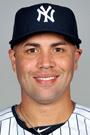
-
Carlos was the Royals 1998 Minor League Player of the Year. He had been selected the Carolina League's most exciting player, best outfield arm, and best defensive outfielder early in the season in a poll by Baseball America.
- In 1999, Carlos was named the American League Rookie of the Year.
-
Beltran was married to his high school sweetheart, Jessica Lugo, November 6, 1999, then took a Caribbean cruise for his honeymoon. "We have fun together," Carlos said. "When we're home we like to have some dinner and then see a movie. We love movies. I like funny movies the best."
- Before every at bat, Carlos signals his love to his wife. He draws a "J" in the back of the batter's box with his bat.
-
When Beltran was asked how cool it was to be asked for his first autograph, he said, "I tell you what was great. It was when someone gave me my baseball card to sign. I thought, 'Wow, that is ME on this card. That's when the reality of being a professional baseball player hit me. It is a dream come true."
-
In July 2000, Beltran bought a monkey through an exotic pet dealer. He showed it off to teammates, bringing it to the Royals' clubhouse. He named it "Mikaela."
Carlos found the pet on the Internet from a St. Louis dealer and drove two hours to meet the owner halfway. A neighbor had a monkey during his youth, and the thought of owning one appealed to him. The life expectancy of the monkey is 45 years.
Beltran thought it through, however. He would be responsible to take care of the monkey for 45 years, a very long time. So he sold the monkey.
-
Carlos is quiet; he doesn't talk much at all. He is not very confident. Even during his tremendous 1999 Rookie of the Year season, he would go several at-bats without a hit and was genuinely afraid he would be sent down to Triple-A. This, while he was hitting nearly .300!
- The Royals suspended Beltran without pay August 3, 2000 for failing to show up for rehabilitation in Florida. So Carlos's agent, Scott Boras, filed a grievance. Beltran felt he could receive better medical attention in Kansas City.
-
In 2001, Beltran made an effort to be more vocal, talking with his teammates more than ever before. "I'm still kind of quiet because I'm not a guy like Carlos Febles—always yelling and happy," Beltran said. But he made an effort to interact with teammates.
- The occasional lack-of-interest and waste-of-talent effort Carlos showed in 2000 was not visible in 2001. In fact, Beltran is growing as a team leader. Though still basically quiet and shy, he is becoming more vocal in hitters' meetings and in the way he talkes to the media.
-
Carlos and pro golfer Chi Chi Rodriguez live near each other in Puerto Rico, and they've become great friends. Chi Chi says Beltran is a natural golfer. He introduced the centerfielder to golf in Dorado, Puerto Rico during the winter before 2002 spring training.
FAMILY
-
Wilfredo and Carmen Beltran raised Carlos and his older brother, Nino, and younger twin sisters Marie Liz and Liz Marie in modest circumstances in Puerto Rico. They lived on Calle Zafiro, a side street in the city of Manati.
Wil supported his family by working in a pharmaceutical company's warehouse, shipping and receiving. Carmen, better known as Mimin, tended the house and made ends meet. Nino and Carlos played baseball. The twins played volleyball. The parents sacrificed what they had for the kids. It was a happy life in a small home, made comfortable by love.
-
Carlos and his wife bought a home for his parents. They furnished it completely, taking Carlos's Mom, who knew nothing of the impending gift. Once everything was in place, Carlos and Jessica had a house-warming party. Carlos was so overcome as he began to announce the gift that Jessica had to take over.
"We just want to tell you guys that this house is not for us," she said. "It's for you, Mimin, and for you, Wil." They held up two sets of keys, one with a "C" for Carmen, one with a "W" for Wilfredo. Now it was Mimin's turn to cry. "It was a surprise, a great surprise," she said. "Everyone knew it but us." Jessica said Wil was so stunned he sat motionless in his chair for 15 minutes. "My Dad and my Mom gave me everything they could have given me," Beltran said.
"Even if they didn't have the money, my Dad used to get the money from somebody else to give me. As a kid, I always dreamed about doing this. I always told my Mom, 'When I get to the big leagues, I'm going to get you a new house.'" The promise was kept. "It was from me and from God," Beltran said, "because he's the one who gave me the talent to play this game."
-
On October 26, 2007, Carlos's daughter, Ivana, was born when his wife, Jessica delivered her. And Carlos was forever a happier man—a happy father.
TENNIS BALLS
-
During 2004 spring training, Beltran spent a lot of time looking at tennis balls. At the suggestion of new teammate Juan Gonzalez, the Royals used a system called COE (Condition Ocular Enchancement). Put simply, it's a cannon-like device that fires yellow tennis balls at home plate at anywhere from 80 to 150 mph. Batters track the balls and try to pick out a small red or black number painted on each side.
"The first time that we did it, I couldn't see the numbers. But now that we're doing it every single day, I can see them," Beltran said, "and that's really helping me to stay with the pitch and track the ball all the way to the glove.
The purpose is to wait as long as possible before swinging. "The longer you can see the ball come into the plate, the better. Your hands will automatically make the adjustment," said Mike Victorn, who operates the system.
Beltran soon became an advocate. "This is something that George Brett told me the first year I was in spring training in Florida," Beltran said. "He told me you need to track the ball all the way to the glove because if you do that, you will stay with the ball more and you won't jump forward. I never figured it out until now when I've been doing it with the machine. It really works."
Victorn says eventually players can pick up the rotation of the ball, enabling them to tell what kind of pitch is being delivered from the time it leaves the pitcher's hand. "It's an exercise," he said. "The muscles in the eyes are just like any other muscles in your body. The more you use them, the better they become. And the longer you can keep your eyes on the ball, the more it'll benefit you." (Dick Kaegel-MLB.com-3/9/04)
-
Carlos likes to go deep-sea fishing. He also is a good cook.
-
It is nothing for Beltran to spend four or five hours playing computer baseball in the off-season.
-
Carlos often begins sentences with "I pray to God ..." And he means it.
-
One day in 2005 spring training, Carlos arrived at the park with his head shaved and just a hint of stubble remaining. It seems his wife, Jessica, gave him a haircut and he wasn't completely satisfied with the results, so he just took it all off.
"It will grow back," he said. "I've done it before. It's not my favorite, but it will grow back."
GIVES CREDIT TO THE LORD
-
Carlos treasures the short time he had with the Astros. "The experience I had in Houston was incredible," Beltran said early in the 2005 season. "God gave me the opportunity to play with good Christian people. I really got along well with all of them, and I enjoyed my time in Houston."
-
In July 2005, Carlos gave all of his teammates a copy of a book titled, Your Best Life Now. The book had been recommended to Beltran by his pastor in Puerto Rico. He bought one, and he and his wife, Jessica, began reading it together.
"It's a good book. It's about life and how to walk straight," Beltran said. "I wanted to share it with all my teammates."
-
At the end of the trying 2005 season, Carlos said, "I think God has helped me," said Beltran, "because I pray every single night to come to the ballpark, not worrying about getting hurt again. I put my faith in Him; that's the way I do everything in my life. know God has control of everything. He's teaching me something about where I am and I know the next years to come will be great years for me because He's preparing me for something better. I believe that."
-
During the offseason before 2006 spring camp opened, Beltran built an indoor batting cage at his home in Puerto Rico and used it every day, including Christmas, as part of his winter regimen.
THE CARLOS BELTRAN FOUNDATION
-
Most important to Beltran are his wife, Jessica, and their daughters, Ivana and Kiara.
Two other important things happened in June 2013. He was nominated for the Roberto Clemente Award, and he's witnessing the first graduating class of the Carlos Beltran Baseball Academy in his native Puerto Rico.
"I talked to Jessica's grandmother," Beltran said. She was in Puerto Rico that day, and she said it was a sad, sad day for Puerto Rico, because people really looked up to Roberto." And Beltran idolized Clemente.
"Roberto was a player that, as a kid, I grew up hearing about the things he did on the field and off the field," he said. "I never got a chance to watch him play personally, but there are a lot of memories of him in videos. And when I get the chance to see those, it really amazes me how great a player he was. At the same time, he was a great humanitarian.
That's a major reason that Beltran has tried to follow in Clemente's humanitarian footsteps throughout his career. After seven years of planning, he took a giant stride with the formation of the Carlos Beltran Baseball Academy in the ecologically-friendly town of Florida, Puerto Rico. It's a high school for 10th, 11th, and 12th grades.
"We specialize in baseball, we do tryouts, and select the kids that we think we can help develop their tools and their talent," Beltran said. "We provide materials and everything they need to help them get to where they want to be."
The kids, of course, also have an extensive academics program, with all classes bilingual, Spanish and English.
"The reason I did it that way is because when I signed as a professional ballplayer, I didn't know how to speak English," Beltran said, "so it really took me time and it was hard for me to get used to being in the United States."
Beltran donated $4 million to build the school and its facilities on an 18-acre site. When the school opened in August 2011, there were 60 students. By 2013, it was up to 145. Transportation is provided, and they come from all over the island, some living an hour and a half away.
The academy's success was reflected in the 2013 baseball draft. Two of its players were selected—shortstop Jan Hernandez by the Phillies in the third round and outfielder Joseph Monge by the Red Sox.
The kids are required to have a certain grade point average and must raise it as they continue in school. The goal is to propel them toward productive and successful careers in other fields if their baseball dreams are not fulfilled.
Vera Clemente, Roberto's wife, has visited the academy.
"She talked to the kids about Roberto, and it was great, because you don't hear those stories every day," Beltran said. (By Dick Kaegel / MLB.com - 6/10/2013)
-
Beltran spoke of the Carlos Beltran Foundation.
"We started the Foundation eight years ago, and it has been involved in several projects," Beltran said. "First, we built an academy in Puerto Rico. I've always wanted to get involved in community projects in every city I've played in. In St. Louis this year, we awarded eight scholarships to Latino students so they could attend universities. I believe a lot in education, it's something very important to me. God has given me a lot of opportunities and blessings in playing this sport, so I've always wanted to give back and help whenever I can."
Beltran and his wife, Jessica, recently partnered with the Hispanic Arts Council of St. Louis to create the Carlos Beltran Scholarship Award, and they donated a total of $20,000 to eight lucky students. He knows how many kids participate in Beltran's Buddies, a program in which he hosted two dozen underprivileged youth at the stadium, and he knows exactly how many ballplayers were in the first graduating class from the Carlos Beltran Baseball Academy earlier this year.
"I flew overnight, and arrived at Puerto Rico at 5:00 a.m. The graduation started at 9:00 a.m. I was able to talk to the youngsters and congratulate them," he said. "I also had plenty of pictures taken with them. I was already on my way back to the States in the afternoon, landing in New York because we were starting a series against the Mets the next evening."
Beltran beams every time his hero, Roberto Clemente, is mentioned, and he is proud to say that the Puerto Rican Hall of Famer still inspires him today.
Since 1972, Major League Baseball annually has presented the Roberto Clemente Award (originally known as The Commissioner's Award) to recognize the player who best exemplifies the game of baseball, sportsmanship, community involvement, and the individual's contribution to his team. In 1973, following the tragic death of Clemente, the award was renamed. Today, it's arguably the most prestigious award in baseball.
"I never had the chance to see [Clemente] play, but as a Puerto Rican, I was able to grow up listening to stories about him, and that's something you get to have instilled in your mind, soul and your character," Beltran said. "Clemente lives in our hearts every day. He believed in fighting against injustice in the Major Leagues, he spoke his mind whenever he found something unfair."
"God is blessing me with the opportunity to play baseball for so many years and make plenty of money with it, so it was something I wanted to do, not just so I could make a one-time donation, but I wanted the chance of making something that would be of permanent impact, year after year," Beltran said. "It's been a very beautiful project, thank God. We had our first graduating class (in 2012), with 44 students. All students had the opportunity to get scholarships, to come to study at different universities and junior colleges in the United States." (Sanchez - mlb.com - 9/10/13)
-
Beltran was named recipient of the 2013 Roberto Clemente Award.
-
Carlos put a bat under his bed every night. When he is in a mini-slump or whatever, he tosses and turns for only a few minutes.
“No matter how many years you’re in baseball, how much success you have, when you hit a bump, you worry.”
When that happens, when those worrisome thoughts settle into his synapses, Beltran will reach over the side of his bed and find his baseball bat.
“I’ll just feel my grip, work my grip, thinking, thinking,” said Beltran, who has also been known to hold a new bat close to his ear, listening to it's tone.“Sometimes, a thought will come to me, an answer.” Sometimes not.
So in the quiet darkness, with troubling thoughts in his head and baseball bat in hand, Beltran will slip out of bed and stand off to the side.
“I’ll get in my stance,” he said. “I’ll feel my grip, feel my stance.”
-
On the day that Beltran was finally able to hold up a Yankees jersey and call the Bronx his office, team officials talked a lot about his switch-hitting power and his postseason pedigree as the driving forces behind his big three-year contract. The job may be to play right field, but Beltran believes there is much more to it.
Watch the dugout closely. Beltran is often in the ear of a younger player, dispensing advice or telling a story that might apply to a situation. He is even occasionally seen stepping in to serve as a media interpreter for a player who is not confident with his English, and Beltran said that is the responsibility of a veteran.
"You have to be available for the younger guys," Beltran said. "When you see something that you think can help them do better or when they're going through tough times, sometimes they don't know how to deal with those types of situations. You just have a little conversation with them, let them know that, 'Hey, you know what, man, this is baseball. You have to continue to come and work.'"
Those are the brands of positive messages that Beltran has added to the mix. This spring, an invitation appeared on a bulletin board at George M. Steinbrenner Field, notifying players about a social mixer of sorts. Beltran was the driving force, allowing the Minor League players to get some face time with the big league squad. The underlying message: We're all in this together.
"Every year I have done it differently, in different ways," Beltran said. "Sometimes I take 5, 10 guys to eat. I just want to let them know that what they're going through, I went through, and if I can make it, they can make it. It's about encouraging them to work hard and take advantage of the opportunities as a ballplayer." (Hoch - mlb.com - 4/28/14)
-
"That man (Beltran) is willing to do anything you ask him to do, whether it's putting him someplace he's never been or moving him in the order," said Yankees manager Joe Girardi, who has already called on Beltran to make his first career appearance at first base. "He just wants to play and he wants to contribute. It's very, very unselfish." (4/28/14)
-
Beltran said during the 2014 season that he feels fortunate to be experiencing so much of his career in New York. One major difference in Beltran's second tour is a change of home address. At the urging of his wife, Jessica, Beltran parted with the Long Island home they owned during his Mets career and chose an apartment on Manhattan's East Side.
"I like it, man. My wife loves it," Beltran said. "You go down and there's a bunch of things to do. Now living in the city I'm like, man, I missed a lot, you know? The first seven years, I didn't have the time to spend time in the city.
"My wife said the city was good, so I said, 'I want to live in a house, but if you want to live in the city, let's give it a try.' I'm in love with everything. It's so simple, so easy. Just go out and take a taxi and go here, come back. I had a car and I don't know what I'm going to do with it. I'm just happy." (4/28/14)
-
The Yankees have offered their condolences to Carlos and his wife, Jessica, who announced that a miscarriage has resulted in the loss of their first son. "Life took away the blessing of having my first boy," Beltran wrote on his Facebook page in Spanish. "I believe in God and I am thankful for all His many blessings, like my beautiful family, friends, fans, and career.
"Everything happens and will happen according to God's perfect timing, and my wife and I accept it that way. Thank you for all the love and messages."
"It puts things in perspective," teammate Derek Jeter said. "We're here playing a game and we're trying to win games, but the bottom line, family is much more important than anything that happens on a baseball field. Your thoughts and prayers go out to him and his family, but that's terrible. I feel bad for him.
The Beltrans have been married since 1999 and have two daughters, Ivana and Kiara. (Hoch - mlb.com - 9/17/14)
-
The friends and folks from his hometown of Manati (pronounced "man-uh-TEE") in Puerto Rico all call him Ivan, his middle name. Nobody there calls him Carlos.
-
Beltran tells kids, "If you work hard, you dedicate yourself and put in the effort, there is a God upstairs. And He will look out for you. Work at it. That's the way I feel. He has blessed me.
"I'm blessed man. I am honestly blessed."
-
May 28, 2016: Carlos Beltran homered for his 2,500th career hit in the 9-5 loss to the Rays, joining Roberto Clemente, Ivan Rodriguez and Roberto Alomar as just the fourth Puerto Rican-born player to reach the milestone.(B Hoch - Mlb.com - May 28, 2016)
-
December 2016: Beltran committed to play for Puerto Rico in the 2017 World Baseball Classic.
-
Carlos loves to share the wisdom he has accrued from two decades in the game to the next generation, making him more valuable than just his offensive production.
"I'm just happy to help the younger guys," Beltran said just three days shy of his 40th birthday. "I love to study the game. I like to come early and look at the pitchers and see tendencies, and if I see something they're doing, I want to use that to my advantage and at the same time pass it on to the younger guys."
"He is a great presence on our team. He's a stabilizer when it comes to everything, from the mental side of the game with some of our younger players, to the controlled at-bats in the middle of the lineup that 20 years in the league will get you," Astros manager A.J. Hinch said. "He's just a very influential presence on a team that needed that." (Butherus - mlb.com - 4/21/17)
-
Carlos has spent a lot of his free time making sure his legacy has an impact that extends beyond the playing field.
The Carlos Beltran Foundation and the Carlos Beltran Baseball Academy have had a direct impact on shaping young people's futures, either as ballplayers or as educated young adults, or both.
Fundraising is a key element to ensuring the long-term health of these ventures, and no matter where Beltran's career has taken him, he has always held events to support his foundation. On August 20, 2017, he and his wife, Jessica, and their two daughters brought the fundraising efforts to downtown Houston for "A Night in Old San Juan," at the Four Seasons hotel. "We're trying to bring to Houston a little bit of our culture, the way we celebrate in our country," Beltran said.
The Caribbean-themed evening featured live music, tasty Puerto Rican dishes and live and silent auctions featuring unique sports memorabilia and vacations. Proceeds went toward providing scholarships worth $5,000 each to five local students.
"All the fans that buy a ticket, they want to see Carlos Correa, [Jose] Altuve, Marwin [Gonzalez], [Josh] Reddick ... it's important," Beltran said. "I want people to come and enjoy themselves and I'm also a believer that if you are supporting a foundation or an event, you are allowed to have fun. Today is going to be a day to have fun."
It was also a day that would positively affect students who without help from Beltran's foundation may not have had the means to pursue an education. While athletics play a crucial role in the day-to-day operation at Beltran's academy, academics are also front and center and are a priority for Beltran.
"We believe in education, we believe that it's important for us to give back to people who are trying to accomplish good things in life," Beltran said. "I'm a believer that education is huge. I was fortunate to make it to the big leagues but at the end of the day, only one percent of the players that sign as a professional ballplayer make it to the big leagues."
That's where graduating from high school, going to college and developing real-life skills come in. Graduates of the Carlos Beltran Baseball Academy emerge knowing how to do a lot more than just play baseball.
"Coming from Puerto Rico, growing up in a humble family, I know there's a lot of people kind of like me," Beltran said. "Now I'm in a position where I can change people's lives in a positive way."
Astros manager A.J. Hinch said, "Education is very important to him, the English language is very important to him, finishing school is very important to him. As baseball people, we talk about the game a lot. But we're people first and we need to focus on the things like that to have a fulfilled life."
Impacting young lives seems like a good place to start. "That's something that for me is important," he said. "I've been blessed throughout my career to be able to play the game of baseball. God has really blessed me in a big way. It's important for us as a family to care about others." (Footer - mlb.com - 8/21/17)
-
Nov 1, 2019: For nearly seven years, Carlos Beltrán served as one of the most productive position players and free-agent signings in Mets history. The team now brought him back as an on-field leader for what it hopes is an even longer time to come.
“We are thrilled, as we know our passionate fans will be, to have him back in the family,” Mets chief operating officer Jeff Wilpon said in a statement.
After signing a then-record seven-year, $119 million contract before the 2005 season, Beltrán batted .280 with 149 home runs and 100 stolen bases over 6 1/2 years in Flushing, making five All-Star teams. His Mets tenure ended when the rebuilding club traded him to the Giants in July 2011 for Zack Wheeler. Beltrán went on to play for four more teams after the Giants, winning his first title with the Astros in 2017. A year after retiring, he took a job as a special advisor for the Yankees, who lauded his work in that role.
“He’ll be an amazing manager,” one of Beltrán’s former teammates, Astros shortstop Carlos Correa, said. “When he shows up and gets a job with the Mets, I feel like he’s going to change the culture of that clubhouse, he’s going to show the young players how to take care of business, how to study the other teams, how to take every single advantage that you can. He’s going to be a game-changer.”
Beltrán replaced Mickey Callaway, whom the Mets dismissed after two seasons at the helm. Upon parting ways with Callaway, the Mets commenced what general manager Brodie Van Wagenen called “a very detailed managerial search process” that included candidates ranging from Joe Girardi to Beltrán, Eduardo Pérez, Tim Bogar, Derek Shelton, Luis Rojas and others. Like Beltrán, most of the candidates had no previous managerial experience. (A DiComo - MLB.com - Nov 1, 2019)
-
Nov 2, 2019: From the outset, Beltrán sought the guidance and perspective of his friend and fellow Puerto Rican, Alex Cora, who has spent the last two seasons as manager of the Boston Red Sox.
Cora believes the willingness to seek advice bodes well for Beltrán.
“He asked a lot of questions,” Cora said, in Spanish, by phone from his hometown of Caguas, Puerto Rico. “We stayed in touch and I’m really honored that he grabbed the phone to get in touch with me. That tells you a lot, because Carlos was a superstar, but at the same time, he realizes he doesn’t know everything.”
Cora encouraged Beltrán to present himself to the Mets as he is -- nothing more, nothing less.
“That’s the most important thing,” Cora said. “I think organizations prefer people to be sincere and frank and not try to be something they’re not.”
“He’s a student of the game. He has incredible instincts,” said Cora. “Working in the front office with Brian Cashman opened his eyes to aspects of the game like player evaluation, the relationship between a manager and a general manager, how to deal with expectations. So even though he hasn’t had the experience of being in the dugout as a coach or a manager, I think the experiences he’s had throughout his baseball trajectory will allow him to be successful in this new job.” (N Alonso - MLB.com - Nov 2, 2019)
-
Nov 4, 2019: Upon formally accepting the Mets’ three-year offer to become their next manager, Carlos Beltrán received a swarm of texts from friends, family members and countless individuals within the game of baseball. Among those who reached out were three former teammates from last decade: Carlos Delgado, Pedro Martinez and José Reyes. All told, Beltrán said, he received approximately 260 texts, replying to each one individually because “you’ve got to reply when you receive love.”
“It really showed me that I did good things in baseball,” he said.
Beltrán related that story at Citi Field not to boast, but to emphasize the importance of relationships in the game. Although Beltrán accepted the Mets’ job without any prior managerial or coaching experience, he returned to the team having accumulated 20 years’ knowledge as a player, one as a front-office executive and a lifetime more as a son, husband, father and friend.
Emotion is important, Beltrán said. Relationships are everything. At one point during his press conference, he choked up talking about the children in his namesake academy in Puerto Rico. Beltrán’s ability to bring that sort of perspective into a big league clubhouse is part of why the Mets value him.
“His familiarity with New York City, his familiarity with the Mets, his understanding of how to cope with expectations, adversity and success all factored into it,” Mets general manager Brodie Van Wagenen said of his decision. “Carlos didn’t want a job. He wanted this job, and that was powerful in our process.”
Upon arriving at his press conference, Beltrán slipped on his familiar No. 15 Mets jersey, which he wore from 2005-11 as a player, and spoke about the road that led to him becoming manager. Because Beltrán lives in New York, he did not consider any other jobs. Because he was intimately familiar with the Mets' organization -- the good, the bad and the ugly -- from his six-and-a-half seasons here, he understood better than anyone the challenges that await him. The Mets, in turn, know full well what they are getting.
“I feel like I was coming to a place where I didn’t have to sell anything,” Beltrán said. “They knew what kind of person I am. They knew what I can bring to the table.” (A Dicomo - MLB.com - Nov 4, 2019)
TRANSACTIONS
-
June 1995: The Royals drafted Carlos out of high school in Puerto Rico.
-
June 24, 2004: The Astros sent P Octavio Dotel, C John Buck, and cash to the Royals, acquiring Beltran. (The Royals then sent Dotel and cash to the Oakland A's for P Mike Wood and third baseman Mark Teahen.)
When Royals Manager Tony Pena came into his office the morning after the trade, he found a bat on his desk.
The inscription in Spanish: "To Tony. Thank you for your support and friendship. In my heart, you're the best manager I ever played for. Thank you and God bless you. Carlos Beltran."
-
December 2004: The Astros offered Carlos a six-year, $96 million contract. (That's $16 million a year for six years). Beltran's agent Scott Boras had hinted that he wanted a 10-year, $200 million deal for Carlos, but "lowered" the starting price to seven years for $112 million. So he and Beltran looked around at the Yankees, Mets, Tigers, and Cubs. In January 2005, the Mets reportedly offered a bid in the range of $100 million.
-
January 9, 2005: Carlos agreed to a seven-year, $119 million contract with the Mets.
-
July 28, 2011: The Giants sent P Zack Wheeler to the Mets, acquiring Beltran. Carlos waived the no-trade clause in his contract. The Mets reportedly paid as much as $4 million of the $6.5 million left on Beltran's contract.
-
December 22, 2011: Beltran signed with the Cardinals, a two-year, $26 million no-trade contract.
-
November 11, 2013: Carlos turned down the Cardinals' $14.1 million qualifying offer and became a free agent.
-
December 6, 2013: Beltran signed with the Yankees, receiving a three-year, $45 million contract.
-
August 1, 2016: The Rangers sent RHP Nick Green, RHP Erik Swanson and RHP Dillon Tate to the Yankees, acquiring Carlos Beltran and cash.
-
Nov 3, 2016: Beltran chose free agency.
-
December 4, 2016: Carlos signed a one-year, $16 million contract with the Astros.
-
Nov 2, 2017: Carlos chose free agency.
-
Nov 13, 2017 Carlos retired after 20 years in the Majors. Carlos Beltran's last official act as a Major League player was hoisting the World Series trophy for the first time in his career. And although the 40-year-old is riding off into the sunset as a champion, the Astros' championship was not a factor in his decision to walk away from the game he loves.
The veteran outfielder, who officially announced his retirement in an essay on The Players' Tribune, told MLB.com he reached the verdict to hang up his spikes sometime over the summer, never wavering from that choice during Houston's memorable run.
"At the beginning of this year, being in Houston while my family was in New York, it was the first time I've been away from my family for months," Beltran said in his first interview since announcing his retirement. "I told [my wife] Jessica I really missed the family and I wanted to be with them, so I was really contemplating retirement after this year. I said, 'Hopefully we can get to the World Series and win the World Series, so I can go home on a happy note.' "When the family came to Houston for the summer, I told Jessica, 'This will be my last year for sure.' I couldn't be away from my family for such a long time anymore."
Beltran got his storybook ending with the Astros' Game 7 victory over the Dodgers, giving him that long-awaited championship that had eluded him for the better part of two decades. Beltran's finest contribution was his clutch double in the ninth inning of Game 4 of the AL Division Series vs. the Red Sox, which helped Houston clinch the series.
What now for Beltran? He is looking forward to spending time with his family in New York, where his two daughters attend school, though he knows he wants to manage in the Majors someday.
"As a family, we're looking forward to spending time together, traveling, enjoying ourselves and doing things with our kids," Beltran said. "At the same time, I've told Jessica that at some point in my career, I would love to have the opportunity to manage."
The 2017 season had been a different one for Beltran, a nine-time All-Star who had been an everyday player for the bulk of his first 18 full seasons. The Astros signed him to be their primary DH, though as the season progressed, his playing time decreased.
"I told Jessica, 'If I win the World Series, it will be an amazing story; but if I don't, that won't diminish or define who I've been as a ballplayer.' There are so many players that played this game and never had the chance to win the World Series or even go to the playoffs. Being able to win was a great feeling, especially with a great group of guys. It's something we'll remember for the rest of our lives."
"I'm satisfied with my career," Beltran said. "I can see myself back in my hometown of Manati [Puerto Rico], walking to the ballpark when I was a kid, trying to become a professional ballplayer. Seeing the things that I have accomplished in the game, not a lot of guys have accomplished that. That God chose me to be one of those guys, I'm extremely blessed." (M Feinsand _ MLB.com - Nov 13, 2017)
-
Jan 13, 2020: Despite his name appearing in Major League Baseball’s investigation into the Astros’ 2017 sign-stealing practices, Mets manager Carlos Beltrán will not face suspension or any other discipline for his involvement.
Beltrán, an outfielder/designated hitter on the 2017 Astros, was among those who “discussed that the team could improve on decoding opposing teams’ signs and communicating the signs to the batter,” according to MLB Commissioner Rob Manfred. That was Beltrán’s only appearance in Manfred’s nine-page report, which limited individual punishments to Astros general manager Jeff Luhnow, manager AJ Hinch, and former assistant GM Brandon Taubman.
“Assessing discipline of players for this type of conduct is both difficult and impractical,” Manfred wrote. “It is difficult because virtually all of the Astros’ players had some involvement or knowledge of the scheme, and I am not in a position based on the investigative record to determine with any degree of certainty every player who should be held accountable, or their relative degree of culpability. It is impractical given the large number of players involved, and the fact that many of those players now play for other Clubs.”
Luhnow and Hinch both received one-year suspensions and were subsequently dismissed by Astros owner Jim Crane. MLB also fined the Astros $5 million and docked them their first- and second-round picks in the next two Drafts.
A Mets spokesman said that the team would have no comment on MLB’s decision. Beltrán did not respond to a message seeking comment.
Prior to spending the 2017 season with the Astros, in which he won the only World Series title of his 20-year playing career, Beltrán played 90 games for Houston in 2004 after arriving in a midseason trade with the Royals. He signed a seven-year deal with the Mets the following offseason, and he bounced to five other organizations in his final seven seasons before his retirement as a player. (A DiComo - MLB.com - Jan 13, 2020)
-
Jan 16, 2020: In a stunning reversal, the Mets and Carlos Beltrán “mutually agreed to part ways,” less than three months after Beltrán became the team’s manager. He did not manage a single game with the Mets, who suddenly find themselves without a top baseball official less than a month before the start of Spring Training.
“I’m grateful to them for giving me the opportunity, but we agreed this decision is in the best interest of the team,” Beltrán said in a statement. “I couldn’t let myself be a distraction for the team. I wish the entire organization success in the future.”
Beltrán was the only player implicated in MLB’s report, as someone who “discussed that the [Astros] could improve on decoding opposing teams’ signs and communicating the signs to the batter.” The league described Beltrán as a person with knowledge of the Astros’ sign-stealing scheme, but did not discipline him or any other player. (A DiComom - MLB.com - Jan 16, 2020)
- Jan 20, 2026: Carlos was voted into the MLB Hall of Fame with 358 votes, 84.2% (4th year on the ballot)