
|

|

|

|

|
| |
|
|
| |
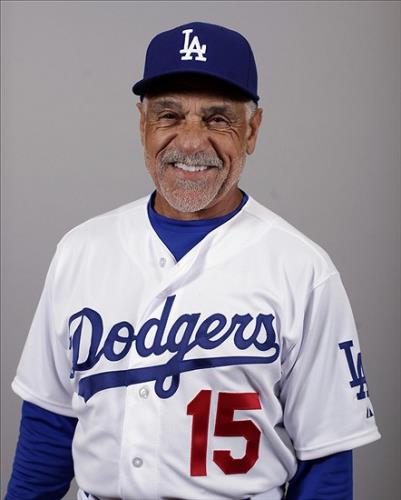 |
Nickname: |
DAVEY |
Position: |
1st Base COACH |
| Home: |
Point Loma, Calif. |
Team: |
Retired |
| Height: |
5' 9" |
Bats: |
R |
| Weight: |
170 |
Throws: |
R |
| DOB: |
5/3/1946 |
Agent: |
Tony Attanasio |
| Birth City: |
East Providence, Rhode Island |
Draft: |
Dodgers #26 (secondary) - Jan.1968 - Washburn Univ. (Kansas) |
| Uniform #: |
N/A |
|
|
| |
| YR |
LEA |
TEAM |
SAL(K) |
G |
AB |
R |
H |
2B |
3B |
HR |
RBI |
SB |
CS |
BB |
SO |
OBP |
SLG |
AVG |
| 1972 |
NL |
DODGERS |
|
11 |
42 |
6 |
9 |
4 |
0 |
0 |
1 |
4 |
0 |
7 |
6 |
.327 |
.310 |
.214 |
| 1973 |
NL |
DODGERS |
|
142 |
535 |
77 |
147 |
13 |
5 |
6 |
37 |
36 |
16 |
62 |
77 |
.352 |
.351 |
.275 |
| 1974 |
NL |
DODGERS |
|
145 |
530 |
95 |
141 |
26 |
3 |
10 |
35 |
59 |
18 |
66 |
71 |
.350 |
.383 |
.266 |
| 1975 |
NL |
DODGERS |
|
155 |
618 |
108 |
162 |
24 |
6 |
8 |
41 |
77 |
12 |
91 |
93 |
.358 |
.359 |
.262 |
| 1976 |
NL |
DODGERS |
|
117 |
427 |
72 |
103 |
17 |
7 |
4 |
20 |
63 |
10 |
56 |
49 |
.333 |
.342 |
.241 |
| 1977 |
NL |
DODGERS |
|
134 |
502 |
85 |
142 |
19 |
5 |
11 |
53 |
47 |
12 |
73 |
69 |
.372 |
.406 |
.283 |
| 1978 |
NL |
DODGERS |
|
151 |
587 |
93 |
163 |
25 |
4 |
17 |
58 |
45 |
4 |
71 |
70 |
.355 |
.421 |
.278 |
| 1979 |
NL |
DODGERS |
|
153 |
582 |
109 |
154 |
20 |
6 |
28 |
73 |
44 |
4 |
97 |
88 |
.372 |
.464 |
.265 |
| 1980 |
NL |
DODGERS |
|
141 |
553 |
79 |
139 |
15 |
3 |
10 |
49 |
23 |
7 |
58 |
71 |
.321 |
.344 |
.251 |
| 1981 |
NL |
DODGERS |
|
58 |
214 |
35 |
44 |
2 |
0 |
5 |
17 |
20 |
2 |
22 |
35 |
.289 |
.285 |
.206 |
| 1982 |
AL |
ATHLETICS |
|
128 |
450 |
58 |
109 |
19 |
3 |
11 |
42 |
28 |
12 |
40 |
51 |
.304 |
.371 |
.242 |
| 1983 |
AL |
ATHLETICS |
|
147 |
494 |
64 |
137 |
13 |
4 |
17 |
67 |
22 |
4 |
51 |
61 |
.341 |
.423 |
.277 |
| 1984 |
NL |
ATHLETICS |
|
72 |
230 |
32 |
59 |
11 |
1 |
9 |
36 |
12 |
0 |
31 |
36 |
.343 |
.430 |
.257 |
| 1984 |
NL |
CUBS |
|
16 |
17 |
5 |
4 |
1 |
0 |
0 |
0 |
3 |
0 |
6 |
5 |
.435 |
.294 |
.235 |
| 1985 |
NL |
CUBS |
|
99 |
275 |
52 |
78 |
11 |
0 |
11 |
44 |
47 |
4 |
46 |
37 |
.383 |
.444 |
.284 |
| 1986 |
NL |
CUBS |
|
59 |
157 |
38 |
47 |
8 |
2 |
6 |
22 |
17 |
6 |
31 |
16 |
.419 |
.490 |
.299 |
| 1986 |
NL |
ASTROS |
|
37 |
98 |
11 |
23 |
2 |
1 |
1 |
13 |
8 |
2 |
12 |
9 |
.315 |
.306 |
.235 |
| 1987 |
NL |
ASTROS |
|
47 |
43 |
4 |
10 |
2 |
0 |
1 |
6 |
2 |
1 |
13 |
8 |
.411 |
.349 |
.233 |
|
|
|
|
BATTING:
|
PLAYING CAREER NOTES
- Davey played mostly at second base during his 16-year Major League career with the Dodgers (1972-1981), Oakland A's (1982-1984), Cubs (1984-1986), and Astros (1986-1987).
- He was an All-Star four times.
- Davey could bat anywhere in the batting order. He could be efficient as a lead-off man or produce runs with good power numbers in the middle of the order.
- When hot, he could hit most any pitch. But he was a high fastball hitter who pulled mostly to left field. His weakness was a good breaking pitch.
- He was good at putting the ball in play.
- He was an excellent baserunner. Davey is the only player in Major League history to steal more than 30 bases after his 39th birthday. He could steal anytime off any pitcher. Lopes knew when he could take the extra base and always got a good jump. He'd study a pitcher -- how he moved to first, where he positioned his feet, how he turned his shoulder -- until he could calibrate a lead to the nearest inch. He stole 557 bases in his career and was caught just 17% of the time. His 83 percent success rate ranks as the game's sixth-highest of all time.
- He was a very good second baseman. Later in his career, he became more versatile, doing a better-than-average job as an outfielder.
- He rarely threw to the wrong base, no matter what position he played.
- Davey was a fierce competitor.
| |
|
|
FIELDING:
|
MANAGERIAL/COACHING TRAITS
- It seemed like Davey couldn't get a managerial position because it was said he doesn't communicate well with kids.
- Lopes is an old-school baseball man. But he says, "My style is some of the old school and some of the new. I believe in discipline and sound fundamental baseball, but also will be flexible when called for."
- Davey speaks his mind. And that turns off some in baseball's hierarchy. Faced with a controversy, the baseball establishment prefers to say something that sounds good, then retire to the cocktail lounge.
- "They always say I'm too honest," Lopes said. "What is that?" Does too honest mean that Davey didn't go into an interview with the idea of telling the interviewers what they wanted to hear, an approach that is sometimes the most direct route to the job? His answer: "You mean kissing ass? No, I'm not going to do that."
- Lopes said, "I'm not going to B.S. people or give the politically correct answer to get their vote. I can't be a politician. They might not like what I say, but they'll appreciate that I'm telling the truth."
- Lopes really maintains an even-keel, tranquil composure to look at him in the dugout, no matter what is going on on the field. "That doesn't mean it's not eating inside you," Davey said. "Overtly, you see a calm picture, but inside there's a lot of things spinning." Much of his managerial calmness rubbed off from Padres manager Bruc Bochy, under whom he coached for five seasons in San Diego. Bochy, a player's manager, takes things in stride and never shows up his troops in public.
- Davey is a positive, optimistic man. He is always rooting for the player and trying to make the player better. He is fun to play for.
- Lopes bemoans the lack of emphasis on baserunning. "It's hitting, pitching, fielding, and then baserunning. Players are paid to hit and pitch. You don't get paid for the little things like running the bases. "The problems with baserunning are only glaringly obvious when it affects the outcome of a game."
- Lopes said the problem isn't limited to the lost art of the stolen base.
"The most glaring problem is the lack of hustle. I was taught early in my career that hustle is one thing you have total control over. Not hustling shows a disrespect for the game, and there's too much of it. My thing is that you should run however hard it takes to reach second on a flyout."
- Lopes' other thing is runners getting from base to base in as little distance as possible. "Guys round first now like they are going out to center to shake hands with the center fielder," said Lopes.
- In 2007, his first year with the team, Davey coached the Phillies to the best stolen-base success rate in Major League history - 87.9 percent.
| |
|
|
RUNNING:
|
POST-PLAYING CAREER POSITIONS
- 1988: He was the Rangers' organizational baserunning and outfield coach.
- 1989: He became Texas's Dugout Coach for Bobby Valentine. Then he was fired at the end of the 1991 season. Sources within the Ranger organization said Lopes got canned because he was a bit too aggressive in campaigning for then-manager Bobby Valentine's job. Baseball protocol frowns on that kind of thing.
- The Orioles soon hired Davey as first base and baserunning coach for 1992 through 1994.
- The Padres hired Davey as first base coach for 1995 through 1999.
-
November 4, 1999: Lopes was named manager of the Milwauke Brewers. GM Dean Taylor hoped Davey could stop their streak of seven straight losing seasons.
Taylor said, "When Davey interviewed, he told us, 'There's a right way to win and a right way to lose. My team will know how to do both.'"
- April 18, 2002: Lopes was fired when the Brewers started off 3-12.
- 2003: Davey returned to the Padres' coaching staff.
- October 14, 2005: The Padres fired Lopes (and Rob Piccioli).
- 2006: Davey joined the Washington Nationals as first base Coach.
-
October 16, 2006: Lopes moved to the Phillies as first base Coach under manager Charlie Manuel.
But on November 1, 2010, Davey informed the Phillies he would not be back as a coach for the team.
"We just had a difference of opinion on what I felt my worth was," Lopes told the website. "That's all. It was a really tough decision because I loved my time in Philadelphia, I loved working for [manager] Charlie Manuel, and I have the utmost respect for everyone in that organization."
-
November 22, 2010: Lopes returned to the Dodgers, becoming their first base Coach.
-
Jan 30, 2018: Fifty years after the Dodgers drafted him, Davey Lopes said on a Newsmakers podcast that he is retiring after 45 consecutive years in the Major Leagues. And he has no regrets. "I'm not doing much. I'm retired, taking it easy," said Lopes, who last worked for the Nationals as a first-base coach in 2017. "It was not a difficult decision to make, but one I was kind of hesitant to make. But it all works out. I got the opportunity to play, manage or coach for a long, long time. I'm extremely thankful. I was one of the lucky ones in the big leagues for 45 straight years. That's a long time. I have no complaints."
Lopes played in the Majors from 1972-87, including 10 seasons with the Dodgers. In '75, he swiped a Major League record 38 consecutive bases without getting caught, a mark which was broken by Vince Coleman in '88. Lopes recorded 557 career stolen bases. The rest of his career was spent as either a manager or coach. Lopes managed the Brewers from 2000 to 2002 and had coaching stints with the Orioles, Padres, Phillies, Dodgers and Nationals.
The highlight of his coaching career came with the Phillies. Lopes was a first-base coach and outfield/baserunning instructor for the Phillies, appearing in the postseason all four years he was there and winning a World Series ring in 2008. "I always liked what I was doing," Lopes said. "Once you have guys who will listen to certain things that you are trying to teach, like I did when I was in Philadelphia ... we had a lot of fun. We went to the World Series; we won it. We didn't quite win the second one. You have to have students and guys that love to play, want to learn and want to win. That's even more important. I had the opportunity to work with a lot of people. You don't do this thing alone."
Former Phillies and Nationals outfielder Jayson Werth once called Lopes the best coach he ever had. "He was really good [when it came to] my overall mentality toward the game and how to play the game," Werth said. "He was very instrumental and kind of molded me into the player I became." (B Ladson - MLB.com - Jan 30, 2018)
| |
|
|
CAREER INJURY REPORT:
|
- March 3, 2008: Lopes was diagnosed with prostate cancer, undergoing surgery a few weeks later. He was expected to make a full reccovery and be back to his coaching duties with the Phillies by the end of April.
| |
|
| |
| Last Updated 5/9/2019 5:53:00 PM. All contents © 2000 by Player Profiles. All rights reserved. |
|