
|

|

|

|

|
| |
|
|
| |
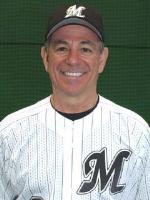 |
Nickname: |
BOBBY |
Position: |
Commentator |
| Home: |
White Plains, New York |
Team: |
Retired |
| Height: |
5' 10" |
Bats: |
R |
| Weight: |
190 |
Throws: |
R |
| DOB: |
5/13/1950 |
Agent: |
Tony Attanasio |
| Birth City: |
Stamford, Connecticut |
Draft: |
Dodgers #1 - 1968 - Out of High School (Conn.) |
| Uniform #: |
N/A |
|
|
| |
| YR |
LEA |
TEAM |
SAL(K) |
G |
AB |
R |
H |
2B |
3B |
HR |
RBI |
SB |
CS |
BB |
SO |
OBP |
SLG |
AVG |
| 1971 |
NL |
DODGERS |
|
101 |
281 |
32 |
70 |
10 |
2 |
1 |
25 |
5 |
3 |
15 |
20 |
.287 |
.310 |
.249 |
| 1972 |
NL |
DODGERS |
|
119 |
391 |
42 |
107 |
11 |
2 |
3 |
32 |
5 |
5 |
27 |
33 |
.319 |
.335 |
.274 |
| 1973 |
AL |
ANGELS |
|
32 |
126 |
12 |
38 |
5 |
2 |
1 |
13 |
6 |
1 |
5 |
9 |
.323 |
.397 |
.302 |
| 1974 |
AL |
ANGELS |
|
117 |
371 |
39 |
97 |
10 |
3 |
3 |
39 |
8 |
5 |
25 |
25 |
.308 |
.329 |
.261 |
| 1975 |
NL |
ANGELS |
|
26 |
57 |
5 |
16 |
2 |
0 |
0 |
5 |
0 |
2 |
4 |
3 |
.323 |
.316 |
.281 |
| 1975 |
NL |
PADRES |
|
7 |
15 |
1 |
2 |
0 |
0 |
1 |
1 |
1 |
0 |
4 |
0 |
.316 |
.333 |
.133 |
| 1976 |
NL |
PADRES |
|
15 |
49 |
3 |
18 |
4 |
0 |
0 |
4 |
0 |
1 |
6 |
2 |
.436 |
.449 |
.367 |
| 1977 |
NL |
PADRES |
|
44 |
67 |
5 |
12 |
3 |
0 |
1 |
10 |
0 |
0 |
7 |
10 |
.253 |
.269 |
.179 |
| 1977 |
NL |
METS |
|
42 |
83 |
8 |
11 |
1 |
0 |
1 |
3 |
0 |
0 |
6 |
9 |
.191 |
.181 |
.133 |
| 1978 |
NL |
METS |
|
69 |
160 |
17 |
43 |
7 |
0 |
1 |
18 |
1 |
1 |
19 |
18 |
.346 |
.331 |
.269 |
| 1979 |
AL |
MARINERS |
|
62 |
98 |
9 |
27 |
6 |
0 |
0 |
7 |
1 |
2 |
22 |
5 |
.405 |
.337 |
.276 |
|
|
PERSONAL:
|
- Bobby graduated from Rippowan High School, where he still is the only three-time All State football player in Connecticut history. A halfback, he held state records for career touchdowns (53) and the 60-yard dash. As a senior, he had six touchdowns in a game—five in the first half on a punt return, kickoff return, interception, pass, and run. Bobby recalled the night before that big game.
"The co-captain of the team and I heard about a little pep rally the other school was having," Valentine said. "So we snuck over to take a little peek into their gym. Sure enough, they had hung me in effigy. It kind of inspired me."
- He had a lot of college scholarship offers to play football. The University of Southern California recruited him as a possible replacement for O.J. Simpson. Trojans coach John McKay wooed Valentine with Heisman Trophy talk. But Bobby signed with the Dodgers for a $70,000 bonus, and went to USC in the offseason.
- In high school, Bobby was also a champion ballroom dancer and was the president of the student council.
- He is married to the former Mary Branca, daughter of former Brooklyn Dodger pitcher Ralph Branca.
- Bobby owns three restaurants in Connecticut: in Millford, Stamford, and Norwalk and two others in Arlington, Texas, named "Bobby Valentine's Sports Gallery."
- While managing in Japan the first time, Bobby lived in a three-bedroom condo real close to Japan's Disneyland.
- Bobby says he used to work in the offseason when he was a player. Once he sold clothes at Frank Martin's in Stamford, Connecticut, but was fired by the owner. "He found be sleeping in the back," Valentine said. "I was just a salesman. I wasn't a manager though, so you can't say it was another manager's job I got fired from."
- Valentine was suspended for two games and fined $5,000 by the National League for not remaining in the clubhouse after he was kicked out of a game June 9, 1999. He returned to the dugout in a disguise: mustache, sunglasses, a black cap and a black Mets T-shirt after being thrown out in the 12th inning. Bobby later explained he was actually just trying to "lighten" the mood on the team with his disguise. And the next day, a few members of the team wore eyeblack strips as mustaches during stretching exercises at Shea Stadium.
- In 2000, Bobby bought a Dodgers uniform he wore 21 years before. It cost him $2,000 on eBay.
- The Hartford Courant placed Valentine 12th on its list of Connecticut's top athletes of the 20th century, mostly on the basis of his all-state status in football, baseball and track.
- Bobby suffered a herniated disk in his lower back early in February 2001, the result of an auto accident in Manhattan. He was clearly in paid sometimes during spring training.
- Valentine was named the Branch Rickey Award winner for 2002, the first non-player to be selected for the award, given annually by the Rotary Club of Denver since 1992. A national panel of 300 sportswriters voted for the award, which is named for the former Dodgers GM who signed Jackie Robinson. According to the Mets, Valentine donated nearly $500,000 to September 11-related charities and hosts families of firefighters and others who lost relatives that day at nearly every home game.
- Bobby has a large collection of World Series programs. "I have the program from the last time the Cubs were in the World Series (1945), and the last time the Red Sox won the World Series (1918). I don't have the 1903, and I don't have the 1919 Black Sox, but I've got the rest of 'em," Valentine said. (Editor's note: 1918 is no longer the last time the Red Sox won the World Series.)
"We're talking about, I think, some of the greatest pieces of art in all of sports. Until they became generic in the '70s, they were all individually done by the individual teams. They reflected the individual city, and they were only sold at the ballpark, so they became quite hard to come by. They're gorgeous," Bobby said.
-
October 2005: Bobby managed the Chiba Lotte Marines to a four-game sweep of the Japan Series. He became the first foreigner to manage a Japan Series champion. South Korean Lee Seung-yeop drove in all three runs as the Marines beat the Hanshin Tigers, 3-2, to win their first Japan Series title in 31 years.
- November 2005: To commemorate Valentine guiding the Chiba Lotte Marines to their first Japan Series title in 31 years, Sapporo Breweries Ltd. has come out with BoBeer, a special version of its popular Black Label lager that's available only in Chiba.
The can features a cartoon likeness of Valentine giving a thumbs-up and saying "We're No. 1."
-
Back when Bobby was managing the Rangers, he built a fence all by himself, in the middle of a blazing Texas summer. No matter how late he'd gotten home, no matter how tired or stressed he was, he'd rise early and spend a few hours each day digging holes, lining up posts and stringing wire around his land.
This story speaks volumes about Bobby Valentine. Dozens of North Texas companies build state-of-the-art fences, and many of them would have been happy to build one for the Rangers' manager.
Valentine could have traded tickets or done an endorsement, or maybe done nothing at all and gotten a fence. That would not have been Bobby V's way. He liked the challenge of building a fence, of doing it right, of doing it in the wilting Texas heat.
Then, one offseason, he built a deck, too. It was 12 feet off the ground and sturdy enough to hold a hot tub. Valentine bought books on building and designing decks. He bought a video tape, too. He bought tools and lumber, and then he built a deck.
Here's an important footnote: Somewhere along the way, a guy told Valentine only a professional could build a deck that would hold a hot tub. That warning only doubled the challenge for Bobby V, and so he built himself a deck.
"They said it couldn't be done," Valentine said. "I used a three-four-five pythagorean theory to square that corner. I still remember that. I couldn't get that sucker square."
When it's mentioned that this deck reveals something of Valentine's character, of his need to be DOING something, he smiled and brushed off the comment.
"I was just too cheap to have one built," Valentine said. (Richard Justice-MLB.com-3/14/12)
-
Bobby also built a restaurant. Anybody can open a restaurant and put his famous name on it. Valentine's idea of opening a restaurant in those Arlington, Texas, years was to first BUILD the restaurant. So he obtained a building in Arlington, and for months, he'd leave the ballpark after a game, drive directly to the building and spend a few hours tearing out, cleaning, building, envisioning.
Once Bobby V's Sports Grill opened, he'd be there some nights, greeting guests, tending bar, making sure the nachos and cheeseburgers were done right. Valentine did not open a restaurant because he needed the money or the ego gratification. He did it because he needed the challenge.
After the September 11th attacks
Valentine poured himself into the relief work in the days after the attacks. He visited workers and the families of victims. He helped load and unload trucks with supplies in the parking lot of Shea Stadium.
Like a lot of New Yorkers, Valentine seemed physically exhausted and emotionally spent by the time baseball returned to the city 10 days later, but the last thing he was going to do was step aside and allow others to do the heavy lifting.
Valentine marveled that New York City's worst moment had also been one of its finest, in terms of a united spirit and unwavering resilience. He waved away credit, but he'd been a tiny part of making that happen. (Richard Justice-MLB.com-3/14/12)
| |
|
|
BATTING:
|
PLAYING CAREER NOTES
- When Valentine signed his first pro contract out of high school, he was assigned to Ogden. Tommy Lasorda was the manager.
"My roommate was Tom Paciorek," Bobby recalled. "He was a teammate of mine for many, many years, and also played for me in Texas at the end of his career. Billy Buckner and Stever Garvey were also on that team. I was extremely lonely and homesick, because it was my first time away from home."
- Bobby played for the Dodgers (1969-1972), Angels (1973-1975), Padres (1975-1977), Mets (1977-1978), and Mariners (1979) during his Major League playing career.
He played mostly in the outfield, but also was adequate at third base. And he spent some time at shortstop, second base, and first base.
- He was a real smart baserunner, but didn't steal a lot of bases.
- In January 1973, the Angels acquired Bobby from the Dodgers in a trade involving Andy Messersmith and Frank Robinson.
- He then went to the Padres during the 1975 season.
- June 15, 1977: The Padres traded Bobby to the Mets with Paul Siebert to acquire Dave Kingman.
- He recalls the beginning of his pro career.
"I was drafted by the Dodgers with the fifth choice in the country. I was playing high school baseball in Stamford, Connecticut, hoping to be drafted by the Mets," Bobby said. "I grew up with the Yankees, obviously, because the Mets weren't around when I was a kid. The Dodgers called that night and said, 'Would you sign if we drafted you?' I said I would definitely give it some major consideration." Valentine signed and was sent to Ogden, Utah to start his career.
"I arrived in Ogden and the plane was real late. Tommy Lasorda was the manager, and Zack Minasian, who's now the clubhouse manager in Texas, picked me up at the airport real late, probably midnight in Salt Lake City. Then we had to drive to Ogden, about 40 minutes away.
"It seemed like an eternity," Bobby remembers. "We finally got to a little hotel called the Ben Loman Hotel. They told me what room I was in, and they told me who my roommate was. His name was Tom Paciorek, now a broadcaster for the Chicago White Sox. He was a teammate of mine for many, many years, and also played for me in Texas at the end of his career. With guys like Lasorda managing, and Tommy Paciorek, Billy Buckner, and Steve Garvey on that team, we had quite a summer."
| |
|
|
FIELDING:
|
MANAGERIAL/COACHING TRAITS
- Bobby is enormously underrated for his ability to mange a pitching staff. He keeps the bullpen fresh and stays on the cutting edge of the best potential late-game matchups.
- Valentine can be a lightning rod for verbal attacks by opponents and media people, because of his his outspokenness. Though controversial, he sure can manage. Bobby has positive enthusiasm and the ability to turn around the attitude of a team.
- He is an unpopular guy among some baseball people. He was once considered to be a self-promoter. When Bobby was a coach with the Mets, during a game in spring training in 1985, a Phillie player intentionally hit two foul balls into the Met dugout trying to pop Valentine.
- But Bobby immediately brought life to the Rangers with his outgoing style. He brought in a confidence and instilled a feeling in the players that if they worked the right way, they could play with anybody.
- But Valentine says, "When I went to Texas, I really thought I could change the world. All I needed was enough time. I thought I could teach everyone better than anybody'd ever been taught, and make all the right decisions. I was naive and inexperienced, but full of energy," Bobby said. "The regret of the situation is that you can't teach experience." Looking back, Valentine now recognizes how long it took to become a Major League manager: "About 500 games. I thought the stuff out on the field was the most important part. It took me about 500 games to realize the other stuff off the field was as important."
- Bobby handles all facets—the players, the press, the fans—very well.
- Bobby makes more trips to the mound than probably any other Major League Manager. But it is the mass amount of injuries to his pitchers that probably cost Valentine his job as Texas' skipper.
- As a third base coach, Bobby had just one line of thinking: "When in doubt, send 'em!" He wholeheartedly embraced the theory of greater risk, greater reward.
- He likes defined roles for all of his players so that everyone knows just where he stands and what his job is.
- Valentine is tightly wound and sensitive to criticism. He hears people say that he is arrogant. A phony. Self-promoting. Sarcastic. And even conniving. Valentine will plead guilty to arrogance. Nothing else.
- Braves manager Bobby Cox said, "I can't believe some of the things he says," but refused to elaborate.
- Bobby might not have a single friend among managers. He is the only manager who spent at least 10 years in the game, but has yet to be invited to a single All Star Game.
- Valentine has a reputation of knowing the game implicitly. Longtime member of the Texas Rangers as a player, G.M. and TV color man, Tom Grieve speaks very highly of Bobby.
"I played for Ted Williams, Joe Torre, Ken Boyer. I've been around a lot of baseball people and I've never met a guy that knows the game like Bobby Valentine. If baseball had an SAT test, he'd score at the top. Bobby could be a hitting coach, pitching coach, base-running coach or outfield coach. He knows every facet of the game."
When Valentine first started managing the Rangers, they couldn't afford a scout to file reports on their upcoming opponents.
"Bobby bought two satellite dishes," Grieve said. "He had them installed outside the clubhouse so he could watch the teams we were going to play and write his own scouting reports.
"When we trained in Pompano Beach, Fla., the city owned the stadium and wouldn't build us a batting cage. Bobby went to a fishing store, bought the netting and poles and built the cage by himself. That night, somebody stole the whole cage. I've never seen him so disappointed.
"You can tell how I feel about Bobby," Grieve said. "I love the guy, but there's another side to him. He has his detractors, but if you delve into their reasons, they are pretty shallow."
There already have been whispers that Shapiro and Valentine will never coexist.
"Some of his detractors are intimidated by him," Grieve said. "He's a confident guy. I don't think he's ever been embarrassed a day in his life. That can make some people uncomfortable. They don't want to hire someone they think is smarter than them.
"But if it's about, 'Who can we hire to be the best team we can be?' If that's what you care about, he's the guy."
Grieve said one of Valentine's faults is that defeat eats at him.
"He's a lot like Billy Martin that way," Grieve said. "It's not comfortable losing and being around him. At the same time, he has patience with young players. He can lead them, he can teach them and he can motivate them. He has more charisma than anyone I've ever seen." (Paul Hoynes-Cleveland Plain Dealer-10/22/09)
- Bobby is keen at gauging when his veteran players need a rest. Few managers maximize the full 25-man roster better than Velentine. He is very much a National League manager.
- Valentine is engaging, smart, funny and knows the game as well as anyone who has ever played or managed it. He will not hide from controversy, and as he has already shown, sometimes will seek it out.
| |
|
|
RUNNING:
|
POST-PLAYING CAREER POSITIONS
- In 1981, Bobby joined the Padres as a part-time scout and minor league instructor. But he was fired in December 1981.
- In 1982, the Mets hired Valentine as a roving hitting instructor.
- From 1983 to 1985, he was the Mets' first base coach and infield and baserunning coach.
In May 1985, he replaced Doug Rader as the Texas Rangers manager. He was Rangers' skipper until July 9, 1992, when Toby Harrah replaced him.
- In 1993, Bobby was the advance scout and player personnel advisor for the Reds. That is, until May 24, when he became the third base coach under new Cincy Manager Davey Johnson. But after the 1993 season, Valentine announced his resignation from the coaching staff.
- In 1994, the Mets hired Bobby to be Manager at Norfolk (IL), paying him $65,000 which made him the third highest-paid Triple-A manager.
- On November 1, 1994, Valentine signed a three-year pact with the Chibe Lotte Marines of Japan. But the team fired him on October 17, 1995, soon after the Japanese League season ended.
He was dismissed because he had different views, reflecting "differences in United States and Japanese baseball," a team spokesman said. Chiba Lotte management differed in training ideas for players. Valentine didn't want to overwork the players, fearing he would exhaust them before games, while management wanted him to concentrate on fundamentals and training.
Reports also were that Bobby had trouble with two of his coaches. The pair might have tried during the season to sabotage Valentine, enough so that he nearly had a fight with one in the dugout during a game. Bobby told "Pacific Stars and Stripes" the coaches wrote bogus game reports, relayed different signals than Valentine had ordered, and, though he had no proof, might even have given signs to opposing teams. Valentine found out about a falsified report, sent to the front office from a road game, when someone in the office mistakenly put it in Valentine's mailbox. When he got back and saw the fax, he had an interpreter read the contents, which falsified a game analysis to make Valentine look bad.
- In 1996, Bobby returned to the USA. He managed Norfolk (IL-Mets).
- On August 27, 1996, Valentine became manager of the Mets, replacing Dallas Green.
- November 2000: He signed a three-year, $7.95 million contract with the Mets, taking him through the 2003 season. But the Mets fired him on October 1, 2002.
He had gone 536-467 in his six years at the helm, during which he directed the Mets to the 2000 World Series, back-to-back NL Championship appearances in 1999 and 2000 and five consecutive third-or-second place finishes between 1997 and 2001. In the team's 41-year-history, only Davey Johnson had more victories (595) and posted a higher winning percentage (.588) than Valentine. But in 2002, the Mets were last in the NL East with a 75-86 mark, the first losing season of his tenure.
- In 2003, Bobby was paid $2.7 million by the Mets not to manage them in the final year of his contract.
- February 6, 2003: Valentine agreed on a three-year deal with ESPN to become a featured studio analyst on "Baseball Tonight."
- November 3, 2003: Bobby signed a three-year deal with the Lotte Marines. Japan's Sports Nippon newspaper reported that he will make an estimated $6.4 million on the three-year contract with an option for two years.
Valentine, who replaces Koji Yamamoto, guided the Marines to a second-place finish in 1995, the team's best finish since 1985. At the end of the '95 season, Valentine had a falling-out with former general manager Tatsuro Hirooka and left Japan.
"This was just the right thing to do at this point in my life," the 53-year-old manager said. "To feel wanted and needed is very important in life."
-
In 2005, as a manager in Japan, Bobby maxed out on his bonuses and made $2.95 for the season.
And in November 2005, Valentine agreed to a three-year contract with Chiba Lotte's Marines. It was worth about $4 million per year.
Chiba Lotte's owners let Valentine go after the 2009 season, to the dismay of fans and players. The owners said they could not afford Bobby.
-
October 2009: Valentine again joined ESPN as an analyst.
-
November 30, 2011: The Red Sox named Bobby as manager.
October 4, 2012: The Red Sox let Valentine go as manager. Boston had a 69-93 record under his short tenure. The club finished in last place in the AL East for the first time since 1992.
-
January, 2013: Bobby accepted a job as a commentator for NBC Sports Radio.
He will be the part-time co-host of a weekday talk show that debuted in April, 2013.
| |
|
|
CAREER INJURY REPORT:
|
- Serious injury ruined Bobby's playing career.
On May 17, 1973, after getting off to a good start with the Angels (.302), Bobby crashed into the centerfield wall at Anaheim Stadium, chasing a ball hit by the A's Dick Green. His right leg was broken in two places.
Valentine never really recovered from this. He lost his great speed.
- In June 1994, Bobby was hospitalized with diverticulitis, a painful intestinal ailment. He felt the condition coming on during a game in Syracuse and checked himself into a hospital the next morning. He then flew to Norfolk, where he was again hospitalized. He missed four games with the Tides.
Valentine had been hospitalized for five days during the winter before the 1994 season with the same condition. He finally underwent surgery in September 1994 to alleviate the digestive problem. It involved the removal of a portion of his large intestine and 15 inches of his colon. If he hadn't been operated on promptly, another attack had the potential to be fatal if it led to a burst intestine.
| |
|
| |
| Last Updated 9/21/2023 7:57:00 PM. All contents © 2000 by Player Profiles. All rights reserved. |
|